Introduction: A Different Way to Experience School
What does a typical school day look like for a child who learns from home? Is it simply a matter of sitting in front of a laptop, completing worksheets, and attending occasional lessons? Or can learning beyond a traditional classroom offer children a structured, engaging, and fulfilling educational experience?
The student life of a homeschooled child can look very different from that of a child attending a conventional school. For many families, home-based education offers greater flexibility, more opportunities for individual attention, and the freedom to explore interests beyond textbooks.
However, successful online schooling is not about removing structure. Children still need a planned academic calendar, qualified teachers, regular assessments, meaningful peer interaction, and opportunities to develop independence.
At Zuvio Global School, we believe that learning should fit into a child's life while providing the academic structure and support every learner needs.
1. A Structured School Day, From the Comfort of Home
One of the most common misconceptions about homeschooling is that children can study whenever they wish, without a fixed routine.
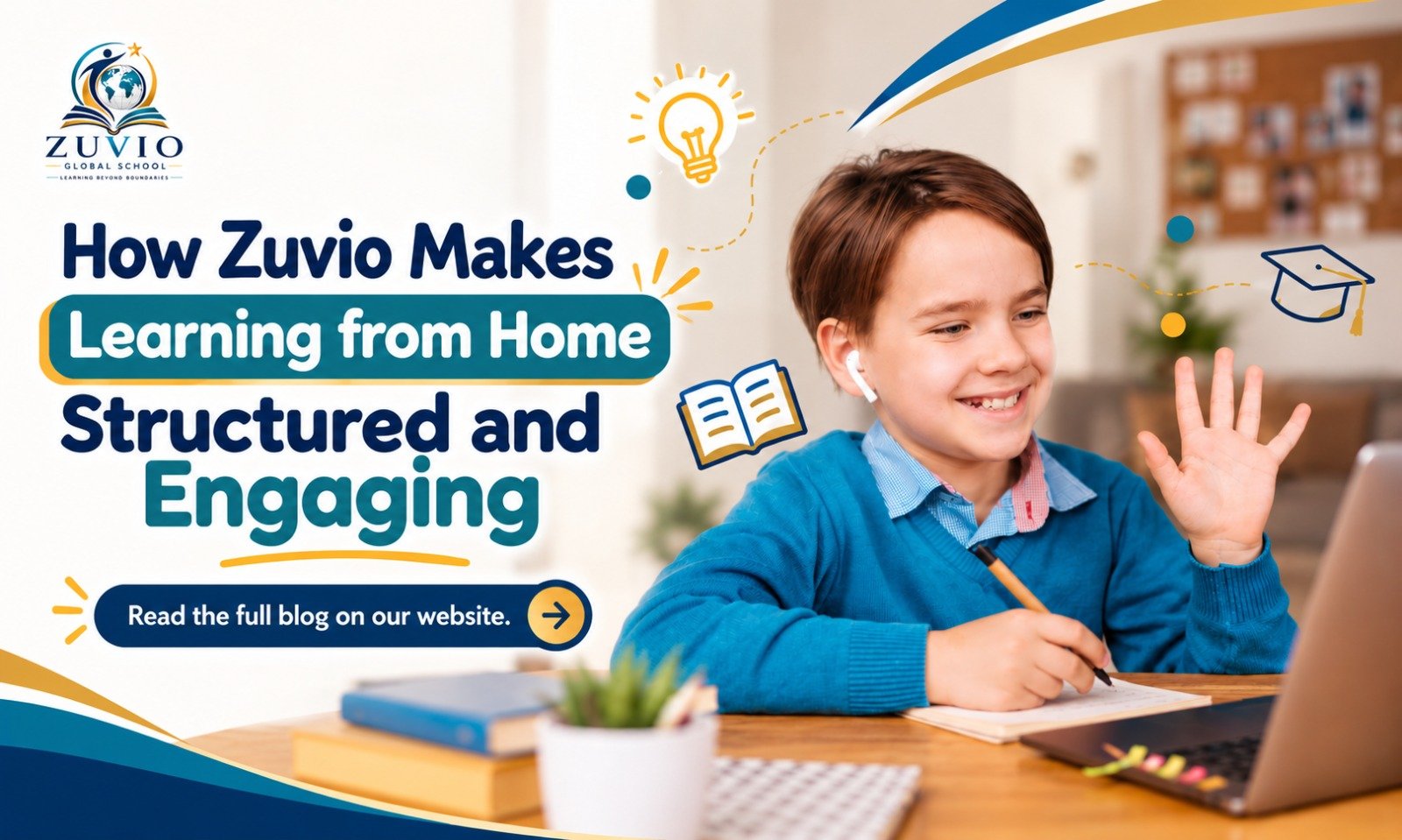
In reality, a well-designed online school follows a planned academic calendar, timetable, and learning schedule. Students attend live classes, interact with teachers, participate in activities, and complete assignments within a structured academic framework.
A typical day may include:
• Live classes led by teachers.
• Subject-based learning in English, Mathematics, Science, and other areas.
• Classroom discussions, questions, and collaborative activities.
• Assignments, projects, and regular assessments.
• Reading time, creative activities, and independent learning.
2. Learning Through Live Classes and Teacher Interaction Online schooling does not have to mean learning alone.
In a live online classroom, students can ask questions, share their ideas, participate in discussions, and receive guidance from teachers in real time. Teachers can explain concepts, identify learning gaps, and encourage students to engage actively with their lessons.
Live classes also introduce children to a classroom routine, helping them practise listening, communicating, collaborating, and expressing their thoughts.
The quality of online education depends on more than the technology being used. It depends on how effectively teachers create engaging learning experiences and support every child's progress.
3. More Time to Explore Individual Interests
One of the important benefits of homeschooling and online schooling is the potential for a more balanced daily routine.
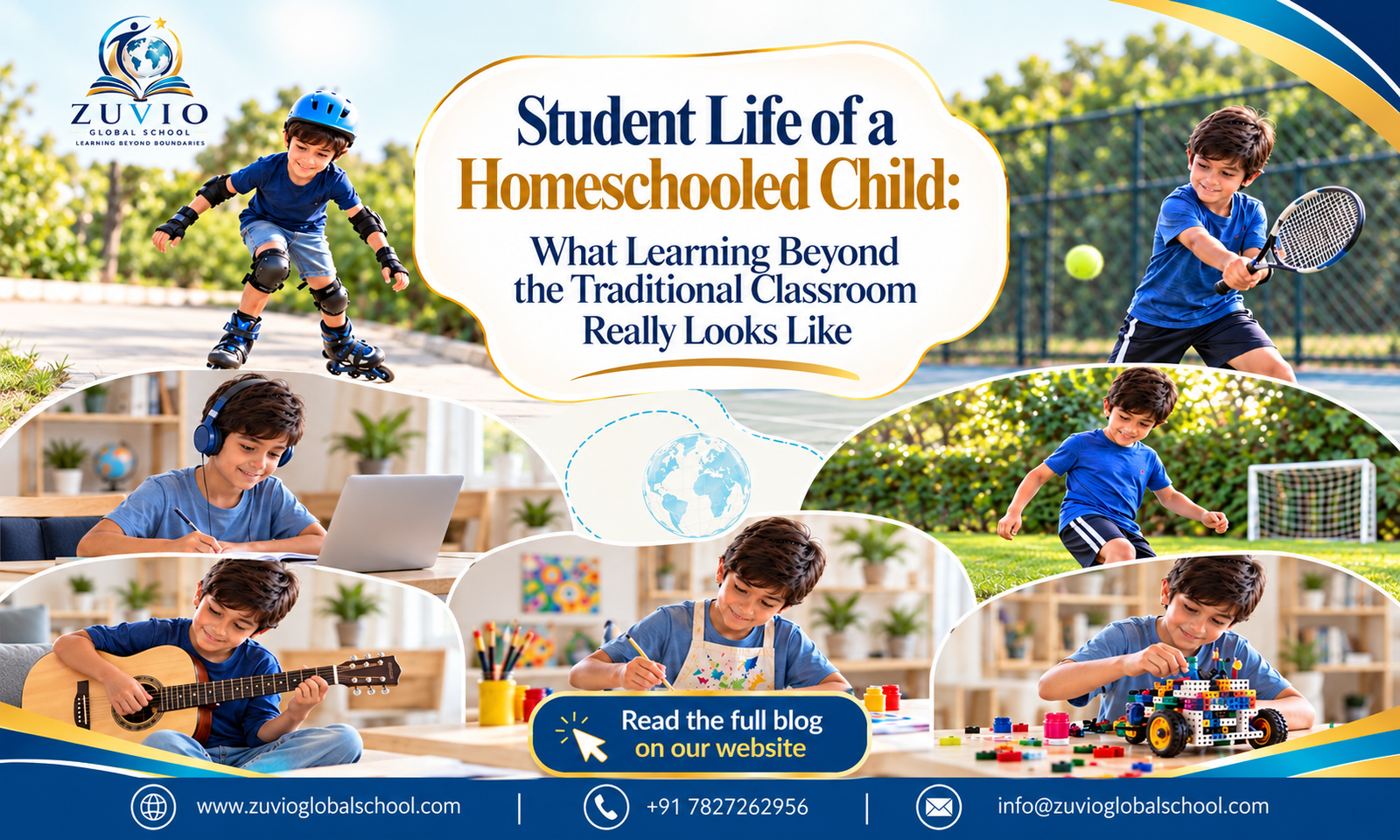
In a traditional school environment, travel time and rigid schedules can limit the time available for extracurricular activities. Learning from home may create more opportunities for children to explore their interests.
This flexibility can help children discover their strengths, build confidence, and develop interests that extend beyond academic performance.
The goal is not to fill every spare minute with another activity. It is to give children the time and encouragement to discover what they enjoy and where their abilities lie.
• Music, art, dance, and creative writing.
• Sports and physical activities.
• Reading and independent research.
• Coding, robotics, and emerging technologies.
• Family activities and personal hobbies.
4. Social Interaction: Can Children Make Friends While Learning From Home?
Social development is one of the biggest concerns parents have when considering homeschooling.
Children need opportunities to build friendships, work in teams, resolve disagreements, communicate respectfully, and understand different perspectives. These skills develop through regular interaction, not simply by being physically present in a classroom.
Online school students can develop social connections through live class discussions, group projects, collaborative assignments, virtual clubs, and supervised extracurricular activities.
Parents can further support social development by encouraging participation in sports, community events, hobby groups, and in-person activities with peers. A balanced approach combines meaningful online classroom participation with opportunities for real-world interaction. Social development should be an intentional part of a child's educational experience.
5. Developing Independence and Life Skills
The student life of a homeschooled child can encourage greater independence when children receive the right guidance.
Managing a timetable, preparing for live classes, organising learning materials, completing assignments, and meeting deadlines help children develop essential habits.
Over time, students can also learn to manage their time, take responsibility for their work, solve problems independently, communicate their needs, make decisions, and balance academic responsibilities with personal interests.
These life skills are valuable far beyond school. They prepare children to approach future academic, professional, and personal challenges with greater confidence.
Of course, independence develops gradually. Younger children still need parental supervision, encouragement, and support in establishing healthy routines.
6. What About Screen Time and Physical Activity? Parents are right to consider screen time when evaluating online schooling.
A healthy online learning experience should include age-appropriate live class durations, screen breaks, physical movement, hands-on activities, reading, and opportunities to learn away from digital devices.
Children should have time for outdoor play, exercise, creative exploration, and family interaction.
Parents can support a healthier routine by creating a comfortable study space, establishing clear device boundaries, and encouraging regular breaks between lessons.
Online schooling should use technology as a learning tool, not allow screens to dominate a child's entire day.
7. Academic Progress and Assessments Still Matter Flexibility should never come at the cost of academic quality.
A reliable online school provides a clear curriculum, planned learning outcomes, a structured academic calendar, regular assignments, and appropriate assessments to monitor student progress.
Teachers can use classroom participation, projects, quizzes, written work, and periodic evaluations to understand how well students are progressing.
Parents should look for an online school that clearly communicates academic expectations, provides feedback, and has a process for supporting students who need additional help.
When evaluating an online school in India, families should also understand the curriculum being followed, the school's educational framework, and any applicable recognition, affiliation, or examination arrangements.
8. The Role of Parents in a Child's Learning Journey
In a home-based learning environment, parents play an important supporting role. However, they do not necessarily need to become their child's full-time teachers.
In a structured online school, qualified teachers lead lessons, explain concepts, assign work, and monitor academic progress.
Parents can complement this process by helping children maintain routines, providing a suitable learning environment, encouraging participation, and communicating with teachers when concerns arise.
The most effective partnership allows teachers to focus on teaching while parents provide encouragement and support at home.
9. Is Online Schooling Right for Every Child?
Every child has different learning needs, interests, circumstances, and preferences. Online schooling may be a suitable option for families seeking flexibility, access to structured learning from home, or a schedule that better accommodates individual circumstances.
It can be particularly worth exploring for families who travel frequently, children pursuing intensive extracurricular activities, or learners who benefit from a different learning environment.
At the same time, families should consider their child's ability to engage online, access to reliable internet and devices, opportunities for social interaction, and the level of support available at home.
The best educational choice is one that supports a child's academic development, emotional well-being, social growth, and long-term aspirations.
How Zuvio Global School Supports Learning Beyond the Traditional Classroom
At Zuvio Global School, we believe that education should combine flexibility with academic consistency.
Our approach to online schooling focuses on live teacher-led classes, a structured academic calendar, curriculum-based learning, and an organised learning experience that helps students remain connected to their education.
By bringing together teacher guidance, planned academic activities, and opportunities to develop skills beyond textbooks, online schooling can help families create a more balanced learning journey.
Children deserve an education that prepares them not only to perform well academically but also to think independently, communicate confidently, and explore their potential.
Conclusion: Education Should Fit the Child, Not Limit Their Potential
The student life of a homeschooled child is not defined simply by where learning takes place. It is defined by the quality of teaching, consistency of academic support, opportunities for social interaction, and freedom to develop interests and life skills.
With the right structure and support, learning from home can become a meaningful educational experience that combines academic progress with personal growth.
For parents exploring an online school in India, the important question is not whether learning happens inside or outside a traditional classroom. It is whether the learning environment helps their child grow, participate, and prepare for the future.
Explore a more flexible, structured approach to education with Zuvio Global School.